
Ultimate Digital Marketing Guide for Small Businesses (Strategy + Channels)
- Tiane De Almeida
- May 16, 2023
- 8 min read

Updated: Mar 7
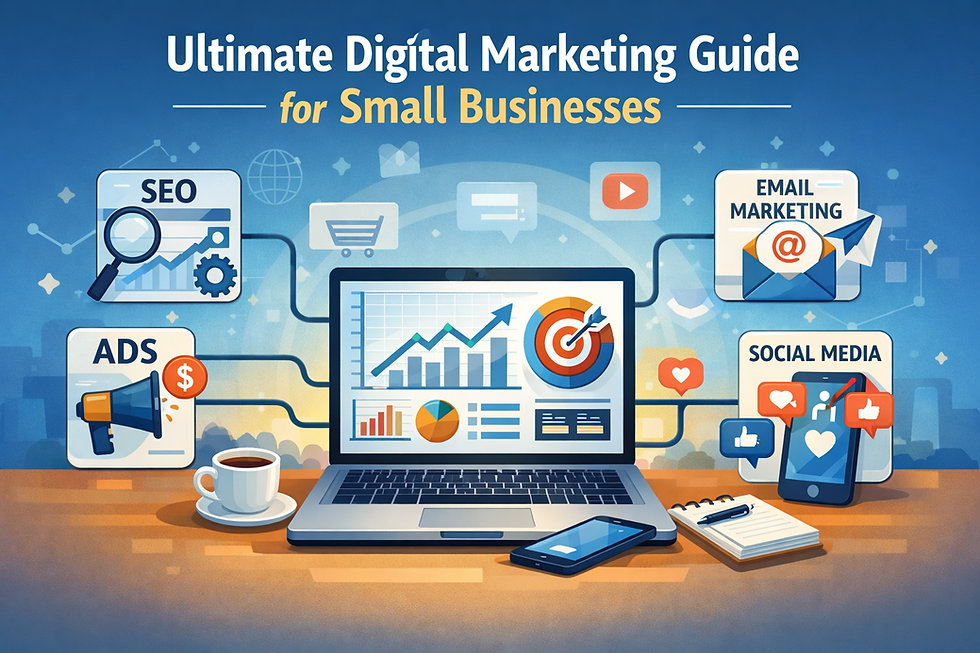
This digital marketing guide for small businesses outlines key strategies, channels, and tools to grow their online presence and attract more customers. Digital marketing allows businesses to reach targeted audiences through platforms such as search engines, social media, email, and online advertising. By understanding how these channels work together and by applying clear marketing strategy frameworks, small businesses can build sustainable marketing systems that generate consistent traffic, leads, and long-term growth.
Ultimate Digital Marketing Guide for Small Businesses
With the rapid advancement of technology, the business landscape has undergone a dramatic transformation. In this digital age, traditional marketing methods alone are no longer sufficient to stay competitive. Enter Digital Marketing, the strategic approach to promoting products and services through digital channels. From search engines and social media platforms to email marketing and content creation, the digital landscape offers an array of opportunities for businesses to connect with their target audience like never before.
What Is Digital Marketing?
Digital marketing refers to the use of online channels and technologies to promote products, services, and brands. Unlike traditional marketing methods such as television or print advertising, digital marketing allows businesses to reach customers directly through platforms like search engines, websites, social media, email, and online advertising.
The goal of digital marketing is not just to attract attention but to guide potential customers through a journey—from discovering a business online to eventually becoming paying customers.
Digital marketing is particularly powerful for small businesses because it allows them to compete with larger companies by targeting specific audiences and measuring results in real time.
Common digital marketing channels include:
• Search engine optimization (SEO)
• Social media marketing
• Content marketing
• Email marketing
• Paid advertising
When these channels are used strategically, they can dramatically increase a business’s online visibility and customer reach.
The Strategic Foundation of Digital Marketing
Many digital marketing guides focus only on tactics such as running ads or posting on social media. However, successful digital marketing campaigns are built on strong marketing strategy frameworks.
Before investing heavily in digital marketing channels, businesses should clearly define:
• Who their ideal customers are
• How they differentiate from competitors
• How marketing performance will be measured
These strategic foundations ensure that marketing activities support long-term business growth rather than simply generating short-term traffic.
If you want to explore these strategic frameworks in more detail, these guides explain them step-by-step:
• Segmentation, Targeting, and Positioning Strategy
• Marketing Evaluation and Control Framework
• Structural Competitive Advantage Framework
Understanding these frameworks allows businesses to build digital marketing systems that are more sustainable and competitive over time.
Digital Marketing: Unveiling the Power of Online Promotion
Digital marketing encompasses a broad range of tactics and strategies, all aimed at maximizing brand visibility, driving targeted traffic, and increasing conversions. By harnessing the power of digital channels, businesses can establish a strong online presence, engage with their audience, and ultimately achieve their marketing goals. Let's delve into some key components of digital marketing and explore how each one plays a crucial role in your online success.

Search Engine Optimization (SEO): Conquer the SERPs
In this highly competitive digital landscape, appearing at the top of search engine results is paramount. That's where Search Engine Optimization (SEO) comes into play. By optimizing your website's content and structure, you can enhance its visibility and improve its ranking on search engine result pages (SERPs). Here are a few key SEO strategies that can help you elevate your online presence:
Keyword Research: Conduct thorough research to identify relevant keywords that align with your business niche and target audience. Utilize tools like Google Keyword Planner and SEMrush to uncover valuable insights.
On-Page Optimization: Optimize your website's meta tags, headings, and content to incorporate the identified keywords naturally. Ensure your website is user-friendly, mobile-responsive, and loads quickly.
Link Building: Build high-quality backlinks from authoritative websites to boost your website's credibility and organic rankings. Engage in guest blogging, create valuable content that naturally attracts links, and leverage social media platforms for promotion.
Content Marketing: Create informative, engaging, and shareable content that resonates with your target audience. Publish blog posts, videos, infographics, and eBooks to establish thought leadership and drive organic traffic.
Pay-Per-Click (PPC) Advertising: Get Immediate Results
While organic traffic is essential, sometimes you need immediate results. Pay-Per-Click (PPC) advertising offers a solution by placing your ads prominently on search engine result pages or other relevant websites. With PPC, you only pay when a user clicks on your ad, making it a cost-effective and measurable way to drive targeted traffic to your website. Here's how you can make the most of PPC advertising:
Keyword Research: Identify keywords with high search volume and commercial intent. Craft compelling ad copies that resonate with your audience and include the chosen keywords.
Campaign Optimization: Continuously monitor and optimize your PPC campaigns to maximize their effectiveness. Test different ad copies, keywords, and landing pages to refine your strategy and improve your ROI.
Audience Targeting: Leverage the power of demographic, behavioral, and interest-based targeting to ensure your ads are shown to the right people at the right time. Refine your audience segments based on performance data.
Ad Extensions: Enhance your ads with ad extensions like site links, callouts, and reviews. These extensions provide additional information and encourage users to take action, increasing your ad's visibility and click-through rate (CTR).
Social Media Marketing: Engage and Influence
Social media has become an integral part of our daily lives, making it a goldmine for businesses looking to connect with their target audience. Social media marketing allows you to build brand awareness, foster customer loyalty, and drive website traffic. Here's how you can effectively leverage social media for your digital marketing efforts:
Platform Selection: Identify the social media platforms that align with your target audience and business objectives. Facebook, Instagram, Twitter, LinkedIn, and YouTube are popular options but choose wisely based on your niche.
Content Strategy: Develop a content strategy that aligns with each platform's unique characteristics. Create visually appealing images, videos, and engaging captions that resonate with your audience. Encourage user-generated content to foster community participation.
Influencer Partnerships: Collaborate with influencers and industry experts to amplify your brand's reach and credibility. Partnering with influencers can help you tap into their existing audience and build trust among potential customers.
Paid Social Advertising: Boost your social media presence with paid advertising. Platforms like Facebook Ads and Instagram Ads offer highly targeted advertising options, allowing you to reach specific demographics and increase conversions.
Email Marketing: Nurture Customer Relationships
Contrary to popular belief, email marketing is far from obsolete. In fact, it remains one of the most effective channels for nurturing customer relationships and driving conversions. Here's how you can craft compelling email marketing campaigns:
Segmentation: Divide your email list into distinct segments based on demographics, behavior, and engagement. This enables you to send personalized and relevant content to each subscriber, increasing open rates and click-through rates.
Automation: Set up automated email sequences to deliver targeted messages at the right time. Welcome emails, abandoned cart reminders, and personalized recommendations are just a few examples of how automation can streamline your email marketing efforts.
Compelling Content: Create engaging and valuable content that encourages subscribers to take action. From newsletters and product updates to exclusive offers and educational content, ensure your emails provide tangible benefits to your audience.
Testing and Optimization: Continuously test different subject lines, email designs, CTAs, and send times to identify what resonates best with your subscribers. Analyze metrics like open rates, click-through rates, and conversions to optimize your campaigns.
Strategic Marketing Foundations
Most digital marketing guides focus on tactics.
But tactics only work when supported by strong marketing strategy frameworks.
Before investing heavily in digital marketing channels, businesses should understand:
• market segmentation and targeting
• positioning strategy
• how marketing performance is evaluated
You can explore these frameworks here:

Essential Digital Marketing Tools
Digital marketing relies heavily on tools that help businesses analyze performance, automate campaigns, and manage online content.
Some of the most commonly used digital marketing tools include:
Analytics Tools
Platforms such as Google Analytics allow businesses to track website traffic, user behavior, and marketing performance.
SEO Tools
Search engine optimization tools like Ahrefs, SEMrush, or Google Search Console help marketers identify keywords, analyze competitors, and improve search visibility.
Social Media Management Tools
Platforms such as Buffer, Hootsuite, and Later allow businesses to schedule and manage social media content efficiently.
Email Marketing Platforms
Tools like Mailchimp or ConvertKit help businesses build email lists, automate email sequences, and track engagement.
Using the right tools can significantly improve the efficiency and effectiveness of digital marketing campaigns.

Common Digital Marketing Mistakes
Many businesses struggle with digital marketing because they focus on tactics without understanding strategy.
Some of the most common digital marketing mistakes include:
Ignoring Search Engine Optimization
Many businesses rely solely on social media while neglecting SEO, which can be one of the most powerful long-term traffic sources.
Focusing on Too Many Channels
Trying to be active on every platform often leads to poor results. Successful businesses usually focus on a few key channels and execute them well.
Failing to Measure Marketing Performance
Without proper evaluation and control systems, businesses cannot determine whether their marketing strategies are actually working.
Competing Only on Price
Many businesses attempt to attract customers by lowering prices rather than building stronger positioning and differentiation.
Avoiding these mistakes can significantly improve marketing outcomes.
Measure Your Strategic Marketing Advantage
Many businesses invest heavily in digital marketing tactics but struggle to understand whether their strategy is actually effective.
Before expanding marketing efforts, it is helpful to evaluate the strength of your marketing strategy and competitive positioning.
You can assess your current strategic position using this free tool:
👉 Take the Strategic Advantage Diagnostic
The diagnostic helps identify potential gaps in positioning, marketing evaluation systems, and competitive advantage.
Frequently Asked Questions:
What are the main types of digital marketing?
The main types of digital marketing include search engine optimization (SEO), social media marketing, content marketing, email marketing, and paid advertising. Each channel helps businesses attract and engage customers online.
How long does digital marketing take to produce results?
Digital marketing results vary depending on the strategy and channels used. SEO may take several months to produce significant results, while paid advertising can generate traffic more quickly.
What is the best digital marketing strategy for small businesses?
The best digital marketing strategy depends on the target market and competitive positioning. Many successful small businesses combine SEO, content marketing, and targeted social media campaigns.
Why is strategy important in digital marketing?
Without a clear strategy, digital marketing tactics often produce inconsistent results. Strategic frameworks such as segmentation, targeting, positioning, and marketing evaluation help businesses focus their marketing efforts effectively.
Ignite Your Digital Marketing Journey
Digital marketing has become one of the most important growth drivers for modern businesses, especially for smaller companies competing in increasingly digital markets. This digital marketing guide for small businesses has outlined the key channels, strategies, and tools that can help organizations build a strong online presence and attract the right customers. By combining effective tactics such as SEO, content marketing, social media, and email marketing with clear strategic frameworks, businesses can create marketing systems that produce consistent results. The most successful companies treat digital marketing not just as a set of tools, but as part of a broader strategy designed to build long-term competitive advantage.


Comments