
Business Ethics and Social Responsibility: A Guide to Ethical Decision-Making
- Tiane De Almeida
- Jun 18, 2023
- 4 min read

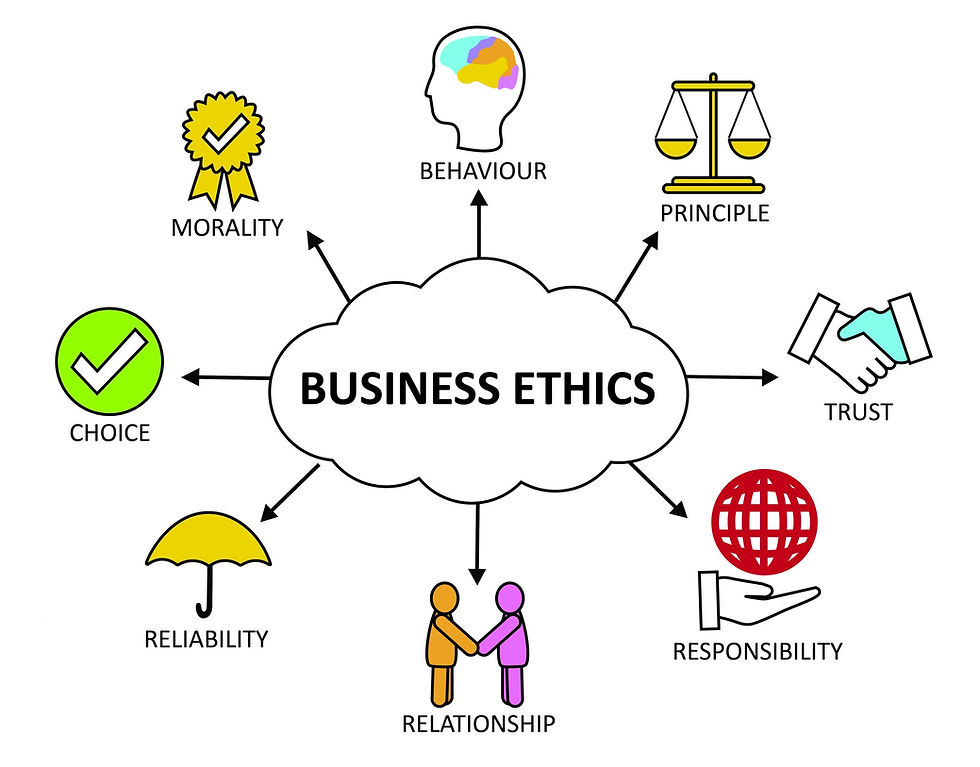
In today's rapidly evolving business landscape, the concepts of business ethics and social responsibility have become increasingly important. Companies are not just expected to generate profits; they are also expected to act in an ethical manner and contribute positively to society. This article aims to provide a comprehensive guide to understanding and implementing business ethics and social responsibility. By exploring various aspects of these topics, we will delve into the principles, challenges, and benefits of ethical decision-making in business.
Business Ethics and Social Responsibility: Explained
What is Business Ethics?
Business ethics refers to the moral principles and values that guide the conduct of individuals and organizations in the business world. It encompasses a wide range of issues, including honesty, integrity, fairness, and respect for stakeholders' rights. Business ethics serves as a framework for making ethical decisions, considering the impact of actions on employees, customers, suppliers, the environment, and the wider society.
The Importance of Social Responsibility
Social responsibility is the concept that businesses have an obligation to act in a way that benefits society at large. It goes beyond merely complying with laws and regulations and involves proactively addressing social and environmental concerns. By embracing social responsibility, companies can foster trust, enhance their reputation, attract and retain talented employees, and contribute to sustainable development.
The Principles of Business Ethics
Transparency and Accountability
Transparency and accountability are crucial principles in business ethics. Organizations should strive for openness and honesty in their dealings with stakeholders. This includes clear communication, accurate reporting, and taking responsibility for one's actions. By fostering transparency and accountability, companies build trust and credibility among their stakeholders.
Fairness and Integrity
Fairness and integrity are fundamental principles that guide ethical decision-making. Treating all stakeholders fairly, regardless of their position or influence, is essential for maintaining ethical standards. Integrity involves adhering to moral and ethical principles, acting honestly, and upholding high standards of behavior. By practicing fairness and integrity, companies promote trust and build long-lasting relationships with stakeholders.
Respect for Human Rights
Respecting human rights is an integral part of business ethics. Companies should ensure that their operations and supply chains do not violate or contribute to human rights abuses. This includes upholding labor standards, ensuring safe working conditions, and avoiding exploitation. By respecting human rights, organizations demonstrate their commitment to ethical practices and contribute to social well-being.
Challenges in Business Ethics and Social Responsibility
Balancing Profitability and Ethical Conduct
One of the key challenges in business ethics is striking a balance between profitability and ethical conduct. In pursuit of maximizing profits, companies may face temptations to compromise their ethical standards. However, by integrating ethical considerations into decision-making processes, businesses can align their goals with societal values and achieve sustainable success.
Navigating Cultural Differences
Operating in a globalized world presents challenges related to cultural differences. What may be considered ethical in one culture may not be the same in another. To address this challenge, companies should develop a global code of conduct that respects diverse cultural norms while upholding fundamental ethical principles. This allows organizations to navigate cultural differences and ensure consistent ethical practices across borders.
Ethical Decision-Making in Complex Situations
Ethical decision-making becomes particularly challenging in complex situations where multiple interests and stakeholders are involved. In such cases, companies must carefully assess the potential impacts of their decisions and consider a variety of ethical perspectives. By fostering a culture of ethical decision-making and providing employees with the necessary tools and training, organizations can navigate complex situations while upholding their ethical obligations.
FAQs about Business Ethics and Social Responsibility
FAQ 1: Why is business ethics important?
Business ethics is important because it provides a moral framework for conducting business activities. It helps organizations build trust, maintain a positive reputation, attract customers, and retain talented employees. By practicing ethical behavior, companies contribute to a more sustainable and socially responsible business environment.
FAQ 2: How can businesses promote social responsibility?
Businesses can promote social responsibility by integrating it into their core values and operations. This includes adopting sustainable practices, supporting community initiatives, promoting diversity and inclusion, and engaging in philanthropic activities. By actively participating in socially responsible actions, businesses can make a positive impact on society.
FAQ 3: What are the benefits of practicing business ethics?
Practicing business ethics offers numerous benefits, such as enhanced reputation, increased customer loyalty, improved employee morale and retention, reduced legal and regulatory risks, and long-term profitability. Ethical companies are also more likely to attract socially conscious investors and enjoy positive relationships with stakeholders.
FAQ 4: How can organizations ensure ethical behavior throughout their supply chains?
Organizations can ensure ethical behavior throughout their supply chains by implementing robust supplier screening processes, conducting audits, and establishing clear ethical guidelines for suppliers. Collaboration with suppliers, transparent communication, and ongoing monitoring is essential to maintain ethical standards and address any violations promptly.
FAQ 5: What role does leadership play in promoting business ethics?
Leadership plays a critical role in promoting business ethics. Leaders should lead by example, communicate ethical expectations clearly, and establish a culture that values integrity and ethical decision-making. By fostering an ethical climate, leaders inspire employees to uphold ethical standards and create a strong ethical foundation within the organization.
FAQ 6: How can companies resolve ethical dilemmas?
Companies can resolve ethical dilemmas by considering various ethical frameworks, seeking advice from ethical experts, and engaging in open dialogue with stakeholders. In complex situations, ethical decision-making processes, such as stakeholder analysis and ethical impact assessment, can provide valuable guidance. It is important to prioritize ethical principles and consider the long-term consequences of decisions.
Business ethics and social responsibility are integral aspects of modern business practices. By embracing ethical principles and demonstrating social responsibility, organizations can build trust, enhance their reputation, and contribute positively to society. Although challenges exist, businesses can navigate them by integrating ethical considerations into decision-making processes, fostering a culture of ethical behavior, and seeking continuous improvement. By doing so, they pave the way for a more sustainable and ethically conscious business environment.


Comments